

Fueling the Hybrid Athlete: Practical Nutrition Strategies for HYROX Training
HYROX has quickly become one of the fastest-growing competitive fitness formats worldwide. For practitioners, it presents an interesting challenge. Athletes are no longer preparing purely for endurance events or strength competitions – they are preparing for both.
A typical HYROX race combines eight 1 km runs with eight functional workout stations, including movements like sled pushes, lunges, rowing, wall balls, and farmer’s carries. The result is a high-intensity hybrid event that places significant demands on both aerobic capacity and muscular endurance.
This raises an important question for practitioners:
How should we fuel athletes for a sport that sits somewhere between endurance racing and strength-based competition?
Understanding the physiological demands of HYROX can help guide more effective nutrition strategies across training blocks – particularly when it comes to supporting the day-to-day demands of training.
Fueling the Training Week
When discussing HYROX nutrition, it’s easy to focus on race day. But in reality, performance is built during training.
HYROX athletes often complete a demanding mix of running sessions, strength training, conditioning work, and race-specific workouts throughout the week. Many also train around work commitments, meaning sessions may occur early in the morning, late in the evening, or even twice per day.
Because of this, consistent fueling across the training week becomes one of the most important factors influencing performance progression.
When athletes arrive at training under-fuelled, the consequences are often subtle at first:
- reduced training intensity and session quality
- earlier onset of fatigue
- poorer technical execution during complex movements
- slower recovery between sessions
Over time, these small compromises accumulate. Training adaptations may plateau, recovery windows narrow, and injury risk can increase.
In contrast, when athletes are appropriately fuelled, they are more likely to sustain intensity, maintain movement efficiency under fatigue, and accumulate meaningful training volume across the week.
For practitioners supporting HYROX athletes, three key nutrition pillars often underpin effective daily training support.
Key Nutrition Pillars for Supporting Training
Supporting HYROX athletes isn’t about applying endurance nutrition or strength nutrition alone. Instead, practitioners must consider how fueling strategies support the repeated transitions between aerobic running and high-force muscular work that define the sport.
Three key nutrition pillars often underpin successful training.
1. Pre-Training Nutrition: Arriving Ready to Perform
Arriving at training sessions well-fuelled is fundamental to maintaining performance across a demanding training week. With sessions often combining running, erg work, and strength-based movements, inadequate pre-session fueling can accelerate fatigue and reduce session quality.
A simple approach is to scale fueling based on how close the athlete is to the session:
- 3-4 hours before training: a balanced meal containing carbohydrates, lean protein, and vegetables (e.g., rice or potatoes with protein).
- ~2 hours before training: a carbohydrate-focused snack such as yoghurt with muesli, fruit with a muesli bar, or toast.
- 30-60 minutes before training: easily digestible carbohydrates such as a banana, sports drink, rice cakes, or raisin toast.
Encourage athletes to trial different foods during training to determine gastrointestinal tolerance and refine their pre-session routine.
2. Intra-Training Nutrition: Supporting Longer Sessions
Intra-training nutrition becomes more relevant during longer or higher-intensity sessions, particularly race simulations or conditioning sessions lasting longer than an hour. In these situations, consuming carbohydrates during training can help maintain blood glucose levels, delay fatigue, and support sustained performance.
Many athletes benefit from around 30-60 g of carbohydrate per hour, typically from practical sources such as sports drinks, gels, or carbohydrate chews. Practising these strategies in training also allows athletes to assess gut tolerance and build confidence before race day.
3. Post-Training Nutrition: Accelerating Recovery
Recovery nutrition becomes especially important when athletes are completing high weekly training volumes or multiple sessions per day.
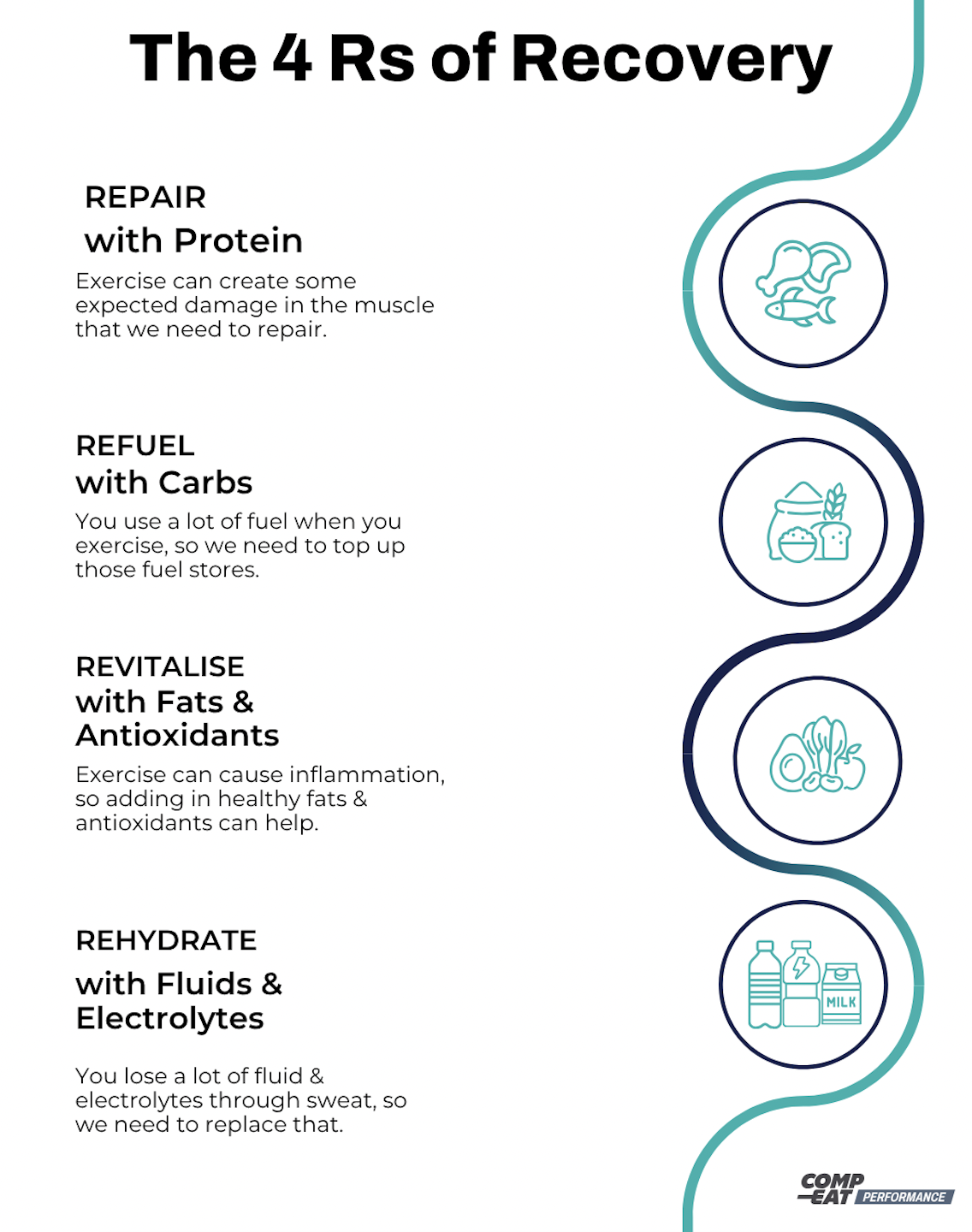
A useful framework for practitioners is the “4 R’s” of recovery:
Want to Explore This Further?
In our new Compeat Academy Sports Nutrition for HYROX course, we take a deeper dive into how to practically fuel hybrid athletes across training and competition.
We explore how to:
- Break down the physiological demands of HYROX and translate them into clear nutrition strategies
- Periodise carbohydrate, protein, and recovery nutrition across different training phases
- Identify common fuelling gaps that limit performance in hybrid athletes
- Apply practical, real-world strategies to support session quality, recovery, and race-day readiness
As HYROX continues to grow, so does the need for practitioners to confidently support this unique athlete population. This course is designed to bridge that gap, helping you move from theory to practical application in a hybrid performance setting.