

Iron Deficiency in Athletes: What Every Practitioner Should Know
Iron is one of those nutrients that looks simple on paper… and then humbles you the moment it shows up in practice.
You’ve probably seen the scenario.
A client walks in feeling flat. Training feels harder than it should. Recovery drags. Focus dips. They’re doing “all the right things,” but something isn’t clicking. Then the blood work comes back, and suddenly iron is centre stage.
Except, as most of us know, supporting iron status is rarely as straightforward as prescribing a supplement and ticking the box.
Iron matters because it underpins so much of how the body operates – oxygen delivery, energy production, immune function, cognitive sharpness, and adaptation to training. When availability drops, the effects ripple far beyond performance metrics. The tricky part? Iron deficiency doesn’t always wave a red flag.
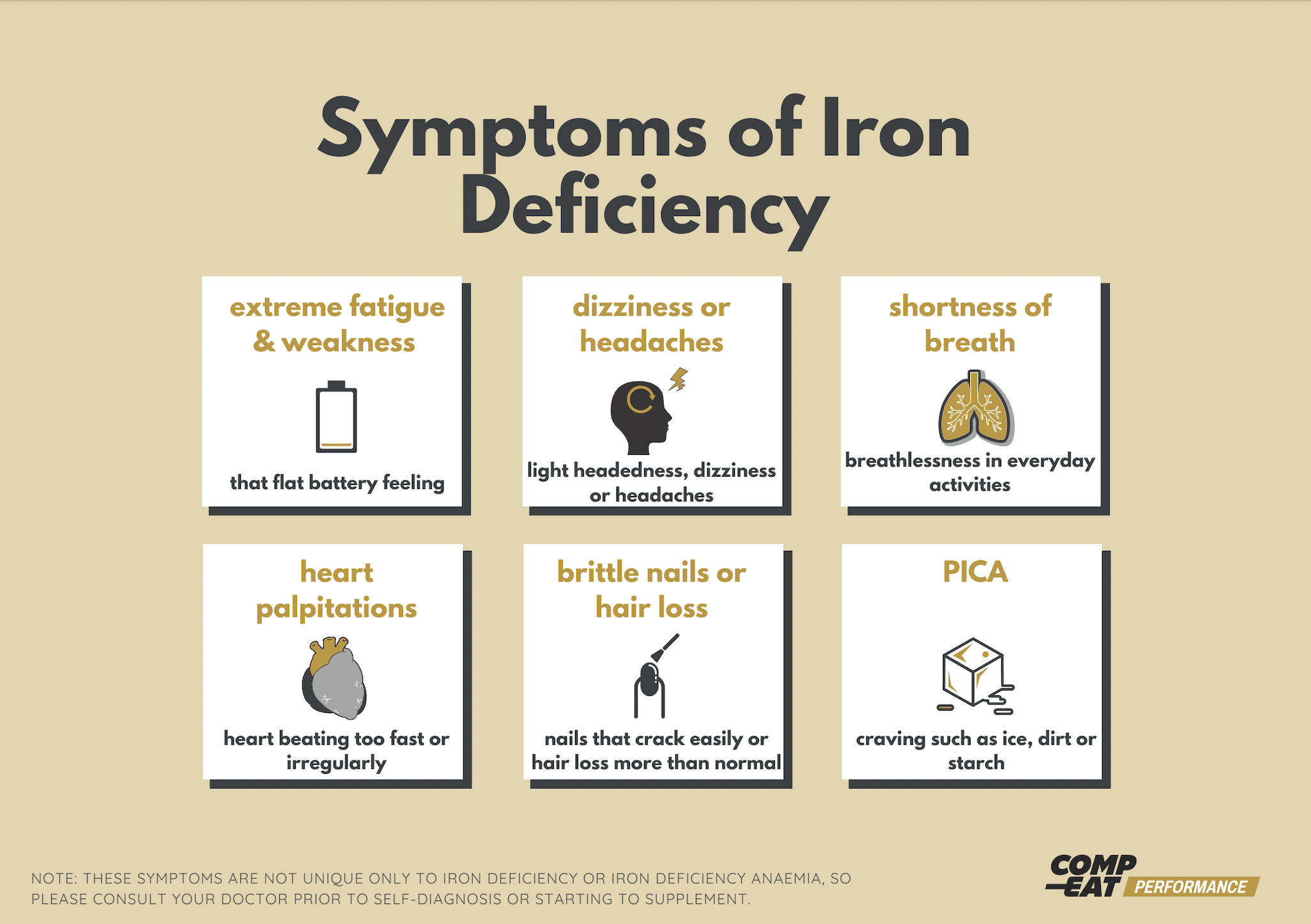
Many clients normalise feeling tired – especially in heavy training blocks or busy life phases, so iron often flies under the radar until stores are already low. This is where our role as practitioners becomes less about fixing numbers and more about understanding context.
Screening With Curiosity, Not Assumption
Iron deficiency is common, particularly in females, but risk is rarely explained by a single factor. Training load, menstrual health, dietary pattern, previous deficiency, blood loss, stress, and broader life demands all interact to influence iron status. Understanding this complexity helps frame why iron matters beyond a single blood result.
Inside the body, iron is distributed across several key compartments:
- Around 70% sits in haemoglobin, supporting oxygen transport through the blood
- About 10% is found in myoglobin, assisting oxygen use within muscle
- The remaining ~20% is stored as ferritin, acting as the body’s reserve
This is often a useful moment to pause and simplify the “why” for clients. Framing the analogy that ferritin is iron ‘savings‘ and haemoglobin as day to day ‘spending‘ can turn abstract blood results into something tangible. When clients understand what those numbers represent, conversations about screening, food strategies, or supplementation tend to land with more clarity and far less anxiety.
Food First, When It Fits
For many clients with suboptimal stores, food-based strategies are a logical starting point. Increasing iron-rich foods, supporting absorption, and being mindful of inhibitors can make a meaningful difference over time.
A beautifully structured nutrition plan that ignores their current bandwidth – time, stress, appetite, finances, or access – rarely leads to meaningful change. Sustainable progress happens when strategies meet clients where they actually are, not where we wish they were.
The Real Work Happens in the Middle
Iron is a powerful reminder that effective nutrition care isn’t about delivering information – it’s about interpretation, adaptation, and partnership.
Often, clients don’t need more rules. They need help making sense of where they are, why their body might be struggling, and what steps feel realistic right now. Listening, adjusting, and meeting clients where they are is often the intervention that makes everything else work.
Because ultimately, supporting iron status, like most of performance nutrition, isn’t about quick fixes. It’s about guiding clients through the middle space between physiology, behaviour, and life.
Want to Go Deeper?
In our recent Compeat Academy Live Q&A – Iron in Practice, we unpacked how iron shows up in real consults and how practitioners can confidently navigate screening, interpretation, and intervention.
We explored how to:
- Connect iron to energy, fatigue, and performance
- Navigate female (and male) specific athlete considerations
- Screen effectively – what to test and how to interpret panels
- Apply practical, food-first strategies
- Use supplementation confidently (forms, dosing, timing, risks)
- Adapt approaches for altitude, endurance sport, and plant-based diets
Because supporting iron isn’t about chasing numbers – it’s about confidently managing the nuance in practice.